
Combat Liberalism, Updated
A List of Liberal Tendencies in the Settler-Colonial Context


“Every great historical event finds, in the small obstructing incidents, something to occupy a portion of its time.”
—Ghassan Kanafani.
It has been some time since the last essay in this publication. Confronting liberal tendencies on the ground, in local solidarity work, takes its own efforts and time—as it must. Theory without practice is empty; practice without theory is blind, and both, together or separate, without the organizing organ are orphans.
The following tendencies were identified and developed through this work on the ground and were later produced here, in a series of essays examining the function of liberalism within the settler-colonial context—specifically, how liberal thought and practice operate as a mechanism for managing dissent, preserving colonial structures, and neutralizing anti-status quo political energy.
These tendencies are not exhaustive but exemplary—observed through practical solidarity work and developed through the essays that preceded this list. They are tendencies, not individual failings; their function is structural, not personal. The aim is to name patterns that reproduce colonial logic within spaces that claim to oppose it.
Finally, we must emphasize, once again, that these essays are grounded in the traditions of Ghassan Kanafani, Mahdi Amel, and the Palestinian resistance, as well as in learning from Indigenous struggle on Turtle Island. They trace the ways in which liberalism manifests not as a neutral position but as an active obstacle to justice. This is a systematic list of these tendencies, updated for the struggle against Western capitalist “common sense” and settler colonialism on Turtle Island and in Palestine.
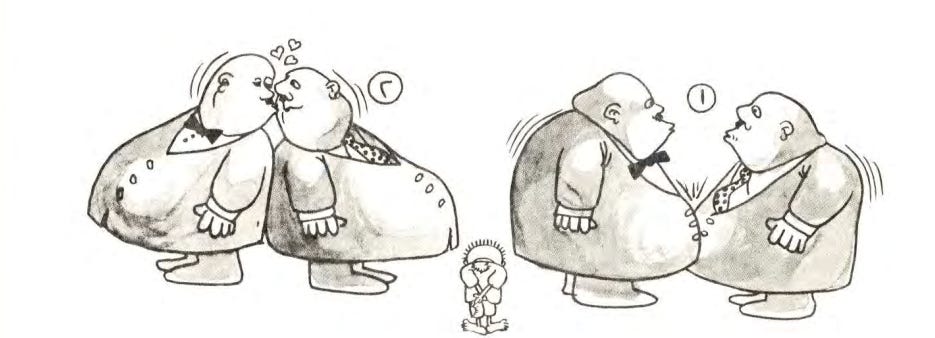
1. To perform land acknowledgments and wear orange shirts while maintaining the legal and bureaucratic machinery of dispossession—the Indian Act, the reserve system, the child-snatching apparatus—and to refuse to name settler colonialism as the ongoing structure it is. To replace material struggle with symbolic ritual, to treat symptoms while preserving the disease, and to mourn cultural loss while protecting the material theft of land. This is one type of liberalism.
2. To host “peace ceremonies” and “shared mourning” events on unceded land while flying the flag of a settler-colonial state, to include Indigenous grief only on colonizer’s terms, and to ask the colonized to mourn alongside the colonizer under the colonizer’s flag. To perform empathy without accountability, decorate oppression with universality, and make peace a condition of continued occupation. This is one type of liberalism.
3. To use the language of reconciliation while investing in the machinery of dispossession, to provide academic legitimacy to colonial propaganda. To launder ongoing theft and make institutions of learning into instruments of ideological maintenance. This is one type of liberalism.
4. To treat the defeat of one apartheid regime as a “closed file” while funding and shielding apartheid elsewhere, to condemn apartheid abroad while maintaining the legal and bureaucratic machinery of apartheid at home. To manage atrocities rather than end them and practice structural hypocrisy. This is one type of liberalism.
5. To adopt the vocabulary of anti-imperialism while deploying it against anti-imperialist revolutions, to measure native sovereignty by Western standards, to claim solidarity while reserving the right to judge, and to position oneself as arbiter of which leaders are martyrs and which revolutions are legitimate. To steal the weapons of the oppressed, turn solidarity into supervision, and transform alliance into audit. This is one type of liberalism.
6. To condemn native revolutions for internal contradictions while ignoring the imperial siege that produces them, to treat native violence as eternal and imperial violence as episodic, to focus on internal repression while remaining silent on sanctions and bombs that constitute the primary violence. To mistake secondary contradictions for primary ones, erase history, serve the colonial timeline, and misidentify the colonial system in the name of critique. This is one type of liberalism.
7. To demand the oppressed prove their worthiness before receiving solidarity, to require they denounce their own leaders, to weaponize the oppression of women or dissidents in the Global South to delegitimize native sovereignty while ignoring the same oppressions produced by one’s own state. To make solidarity conditional and sovereignty contingent, and to weaponize the vulnerable for colonial ends. This is one type of liberalism.
8. To treat the colonized as objects of study rather than subjects of history, to theorize their oppression but refuse their company, to insist on addressing them as fragments rather than a unified people, to doubt that a people under erasure could possess a coherent narrative. To divorce intellectual work from material struggle, to apply divide-and-conquer in the name of solidarity, and to accept the outcome of colonial erasure. This is one type of liberalism.
9. To treat solidarity as ethical consumerism—selecting causes like products, changing channels when inconvenient, balancing a portfolio of struggles—and to treat genocide as one issue among many rather than the litmus test for global justice. To replace political commitment with lifestyle curation, to mistake privilege for pluralism, and to misunderstand the nature of the struggle. This is one type of liberalism.
10. To mistake NGO-led solidarity for genuine movement, to redirect organic political energy into reformist dead ends, and to offer a microphone to oppressed voices while controlling the volume. To replace justice with industry and tokenize the oppressed. This is one type of liberalism.
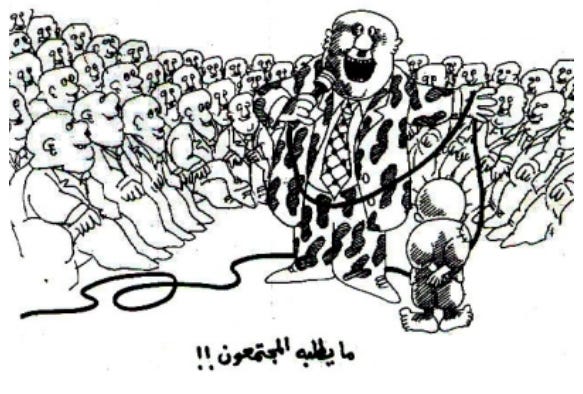
11. To weaponize radical language while prescribing state-dependent solutions—emailing MPs, parliamentary petitions—and to accuse the state of criminality while pleading for its self-correction. To build a campaign on the premise that a settler-colonial state can be a neutral arbiter of justice. To mistake a customer service complaint for revolutionary demand, to be a pressure valve rather than a conduit, and to mistake the puppet for the puppeteer. This is one type of liberalism.
12. To campaign for an arms embargo while refusing to demand complete severance of ties, and to seek to make Canada less complicit without demanding it dismantle its colonial identity. To ask the arsonist to use less kerosene while protecting the right to burn, and to treat symptoms while preserving the disease. This is one type of liberalism.
13. To lecture the colonized on “pragmatism” while forgiving predators in one’s own world, to demand capitulation from the oppressed while extending leniency to the powerful. To apply a double standard that reveals class loyalty. This is one type of liberalism.
14. To define “pragmatism” as accepting the limits imposed by imperial power, to measure success by gaining a hearing in Washington rather than liberating land. To calibrate resistance to the comfort of the oppressor. This is one type of liberalism.
15. To accept the “right to exist” of a state whose foundational ideology and documented intent was the ethnic cleansing of an indigenous population, and to dismiss the Right of Return as a “guarantee of failure” while demanding the oppressed negotiate within the framework of their own dispossession. To grant legitimacy to a premeditated crime and ask the victim to accept the terms of their erasure. This is one type of liberalism.
16. To call for trust in state processes while the state is the chief perpetrator of violence. To ask the oppressed to seek justice in the engine of their oppression. This is one type of liberalism.
17. To label oneself a “liberal” or “cultural” zionist as a benign descriptor, to launder a racist settler-colonial project, to frame settler-colonialism as a “tragic struggle between two peoples,” and to accept the zionist binary that erases Palestinian Jews. To protect the core ideology from critique, create false symmetry, and accept ideological erasure. This is one type of liberalism.
18. To focus on the “soul of zionism” and “Jewish identity” rather than the American war machine that funds genocide, to theorize how to “address Jews” rather than how to address the imperialist state, and to analyze zionism philosophically while dodging the burden of ending U.S.-funded war crimes. To mistake introspection for action and misdirect responsibility from the actual enablers. This is one type of liberalism.
19. To recycle the same liberal zionist critique that has existed for over a century—identifying symptoms while never challenging the cancerous colonial project itself—and to treat liberal zionism as a “bridge” rather than obstruction. To use morality to refresh the brand while displacement continues, and to mistake the gatekeeper for the liberator. This is one type of liberalism.
20. To accept the legitimacy of a state founded on a documented plan of “transfer,” to argue for “negotiation” with a project whose founders explicitly stated their goal was total dispossession. To translate colonial conquest into the language of “state rights.” This is one type of liberalism.
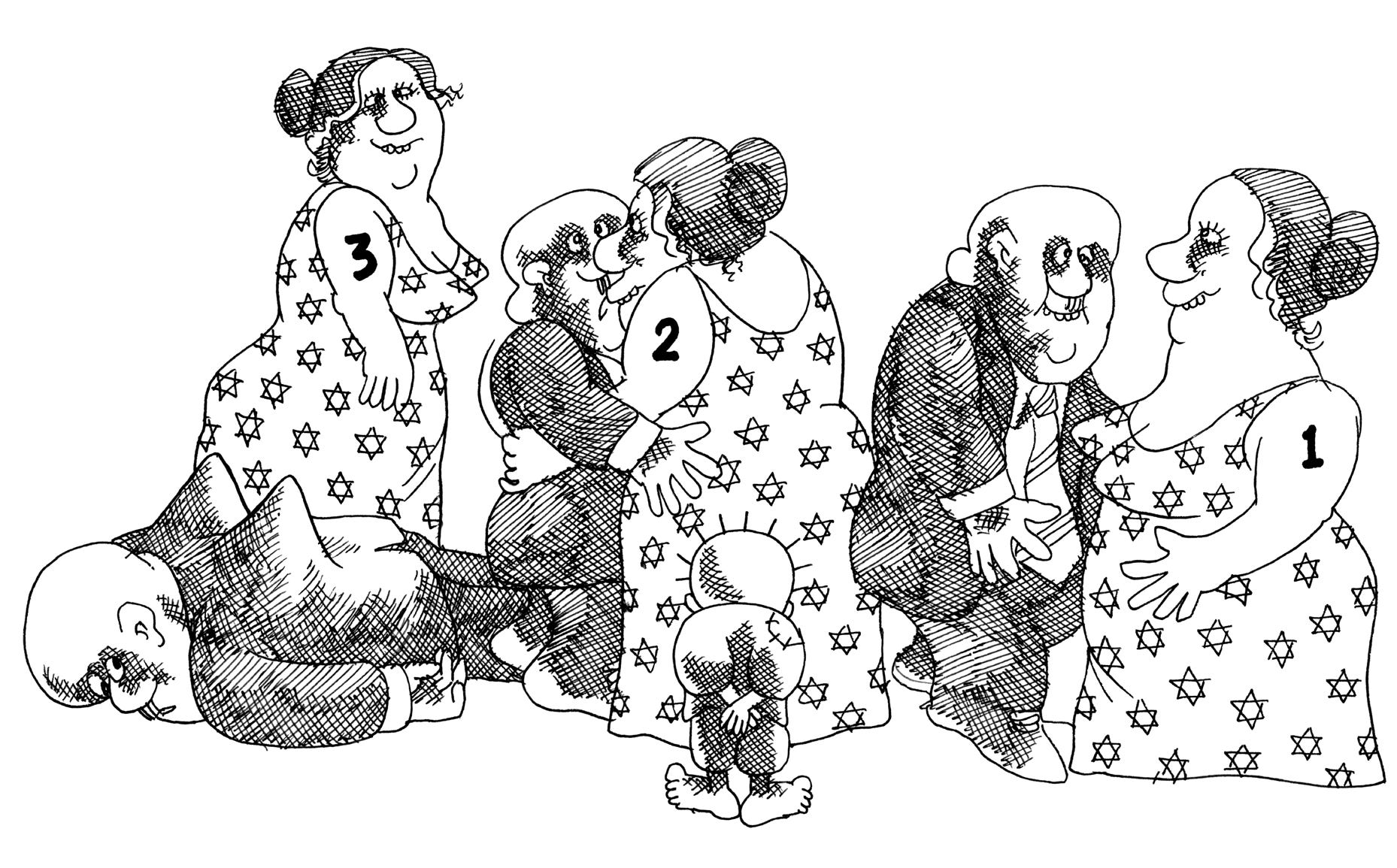
21. To treat the zionist settler-colonial project as a “tragedy” or a “mistake” rather than a premeditated plan of ethnic cleansing documented by its own architects. To launder history and bargain with a blueprint for erasure. This is one type of liberalism.
22. To fly a flag whose stripes claim territory from the Nile to the Euphrates and whose star was appropriated from Canaanite civilization, to accept this as “Jewish tradition” while its founders held traditional Jews in contempt, to ignore that political zionism was a secular coup rejected by most Rabbis and that its ideology was recognized by Hitler as confirming his Judeophobia, and to overlook the Haavara Agreement with the Nazi regime—this is to steal symbols and land in the same gesture, mistake a secular colonial project for a living faith, accept a theological hijacking, and trade Jewish safety for colonial legitimacy. This is one type of liberalism.
23. To provide exhaustive critique while systematically disarming the colonized of strategic clarity, organizational discipline, and anti-colonial theory. To be the intellectual wing of colonial maintenance. This is one type of liberalism.
24. To construct a linguistic theory that abstracts language from its social and political context, to build a science that has no vocabulary for linguistic colonialism. To grant silent assent to the ideological status quo. This is one type of liberalism.
25. To inherit colonial categories as neutral, technical givens, to never apply analytical rigor to the political history of one’s own discipline. To protect the “scientific” core from its own colonial foundations. This is one type of liberalism.
26. To maintain a partition between radical political critique and conservative disciplinary practice, to critique power while leaving the colonial architecture of one’s own field untouched. To be a fragmented thinker whose radicalism is compartmentalized and contained. This is one type of liberalism.
27. To apply analysis of settler colonialism in one context but refuse it in another. To be a living contradiction of one’s own principles. This is one type of liberalism.
28. To claim to oppose colonialism while providing political cover for it. To cross from critic to collaborator with the colonial hegemony. This is one type of liberalism.
29. To erase anti-colonial thought and center only those voices that conform to legalism and Western appeal. To practice epistemic violence and curate “valid” natives. This is one type of liberalism.
30. To mistake theatrical, one-day actions for anti-colonial strategy, to choose tactics divorced from strategy, to champion “plurality” to the point of paralysis where no collective discipline is possible, and to elevate “approach” over analysis and “process” over principle. To prioritize performance over power, replace unity with fragmentation, and mistake preference for politics. This is one type of liberalism.
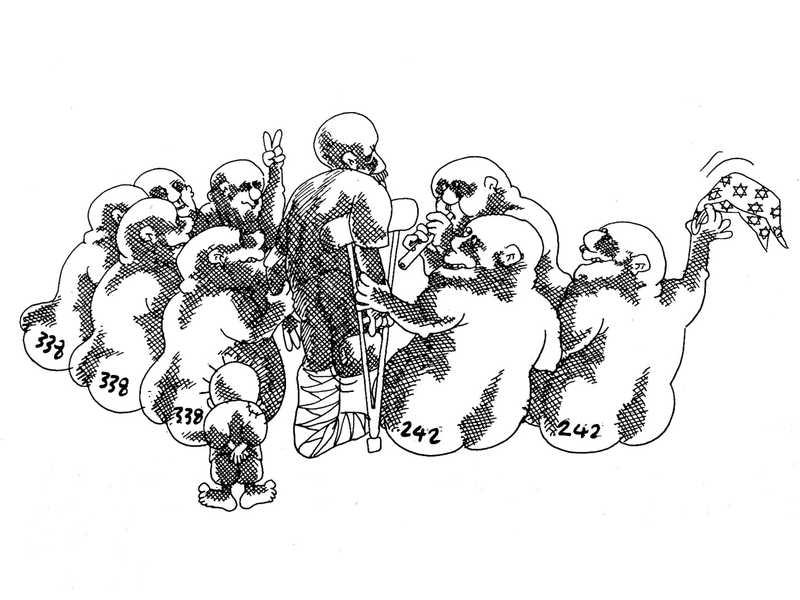
31. To critique power endlessly while never learning to seize and wield it, to deconstruct everything while building nothing, to offer solidarity conditionally, and to build solidarity on the individual’s right to choose their own level of commitment. To mistake analysis for action, transform solidarity into consultation, and prioritize ally comfort over oppressed needs. This is one type of liberalism.
32. To accept the absence of a clear strategy of action, to allow the inability to formulate a plan to be mistaken for the impossibility of implementation. To confuse result with cause and defeat with destiny. This is one type of liberalism.
33. To fail to formulate a strategy commensurate with the dynamism of society, to allow the absence of a work strategy to nullify the ability to channel intellectual, political, social effort toward a clear goal. To mistake chaos for pluralism and paralysis for principle. This is one type of liberalism.
34. To reject organizing structures as “authoritarian” while maintaining a tenured position in the empire’s military-academic complex. To mistake privilege for principle and comfort for critique. This is one type of liberalism.
35. To replace clarity with obfuscation, to mask the absence of purpose with grandiose words that appeal to poetic sensibilities without sharpening vision. To speak a blind language that serves as a shield for those who fear change. This is one type of liberalism.
36. To use ambiguous terminology according to private, unagreed-upon understandings, rendering words meaningless and stripping dialogue of real value. To hide behind words to mask incompetence or conceal intent. This is one type of liberalism.
37. To treat parliamentary systems as synonymous with democracy itself, to mistake formal institutions for the lifeblood of democratic practice. To confuse appearance with substance and form with function. This is one type of liberalism.
38. To practice democracy only at the surface level of society—in parliaments without press freedom, parties without internal democracy, or institutions without youthful absorption. To make democracy a superficial layer rather than the true lifeblood of the social body. This is one type of liberalism.
39. To allow entrenched hierarchies to stifle youthful energy and block the integration of new generations into leadership, to erect barriers against those more attuned to the times. To prioritize stagnation over development and tradition over progress. This is one type of liberalism.
40. To sanctify founding figures and surround them with a small circle that forms a ceiling against which the rising movement of younger generations collides. To replace organic growth with authoritarian stagnation. This is one type of liberalism.
41. To evaluate oneself absolutely positively and others absolutely negatively, to replace dialogue with accusation and mutual understanding with deliberate distortion. To mistake partisanship for sectarianism and critique for slander. This is one type of liberalism.
42. To reduce an anti-colonial struggle to a “conflict” between two peoples, to strip settler-colonialism of its structural logic and treat it as a policy dispute. To mistake the colonial relation for a problem of governance. This is one type of liberalism.
43. To condemn “both sides” of a settler-colonial conflict, to place the violence of the colonizer and the resistance of the colonized on the same plane. To create false moral equivalence, erase the power dynamic, and use the language of the oppressor. This is one type of liberalism.
44. To treat anti-colonial struggles as “humanitarian issues” rather than political struggles, to isolate the present from history and begin analysis after colonization has been achieved. To treat symptoms while preserving the disease, sever causal links, and sanitize colonialism. This is one type of liberalism.
45. To feign ignorance on causality while asserting certainty in effect, to claim neutrality while choosing to ignore context. To use “complexity” as academic surrender and make a political choice that favors the oppressor. This is one type of liberalism.
46. To pathologize the resistance of the colonized by blaming it on the “chaos” of their own oppression rather than the oppression itself. To use the language of the oppressor. This is one type of liberalism.
47. To demand the victim achieve perfect conditions before the perpetrator is asked to stop, to prescribe stability as the antidote to extremism while ignoring the violence that produces the instability. To invert responsibility and mistake symptom for cause. This is one type of liberalism.
48. To frame settler-colonial struggle as religious or ethnic conflict, to refuse to name colonialism in one context while benefiting from it in another. To obscure the colonial structure and be unable to name the defining power dynamic. This is one type of liberalism.
49. To condition liberation on the oppressed disarming first, to use hyper-technical standards to discredit the testimony of the oppressed. To apply the logic of the oppressor through the language of peace and practice cognitive imperialism. This is one type of liberalism.
50. To suppress one’s political truth to protect personal status, to refuse the risk required for genuine solidarity, to hesitate when action is needed, to dilute analysis to avoid naming the system, and to center one’s own comfort over the victim’s reality—this is to make self-preservation a barrier to justice. Their self-preservation is not neutrality; it is complicity. This is one type of liberalism.
51. To form opinions and make decisions not through objective investigation of facts nor through the class and anti-colonial analysis of concrete conditions, but rather to rely solely upon one’s own subjective feelings, vague humanitarian sentiment, or the limits of personal experience—to take what “feels right” or “seems good” as the standard for action, while discarding political analysis and the mass line—this is one type of liberalism.
Comrades in the metropole, we must oppose all these liberal tendencies—whether they appear in the academy, the NGO, the parliament, the solidarity movement, or in our own minds. They corrode collective will, shield settler colonialism, and reduce class and national struggles to idle talk. Some who exhibit these tendencies can be won through organizing; others are functionaries whose liberalism is a class function, not a correctable error. The distinction matters, but the tendency is the same: to manage dissent, preserve colonial structures, and neutralize anti-status quo energy.
These tendencies are not merely errors of analysis. They are expressions of class position, of privilege, of function, of the comfort that comes from being able to choose one’s level of commitment. They are the luxury of those who can afford to treat the struggle as an intellectual exercise rather than a matter of people’s existence.
Against these tendencies, we must cultivate the opposite: disciplined analysis, unwavering alignment with the oppressed, strategic clarity, and the courage to act—collectively. We must learn to listen to those who live the struggle, to subordinate our own comfort to their freedom, and to build the organizing structures capable of seizing political power and severing the colonial relation.
Western capitalist liberalism leads only to managed dissent and perpetual defeat. Root out liberalism. Build the collective.