
A Colonial Managed Conscience
Liberal Zionism as the Ideological Guardian of Settler Colonialism

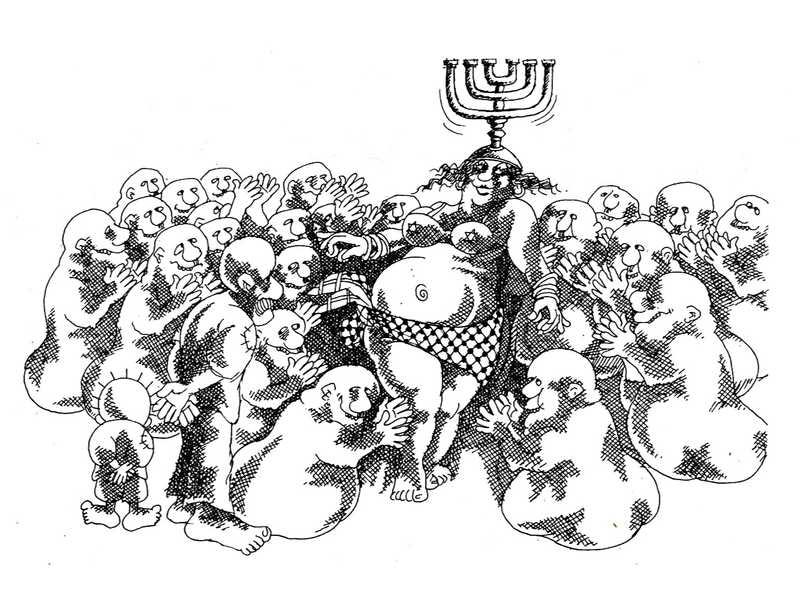
"They steal your loaf. Then they give you a crumb and tell you to thank them for their generosity. Oh their audacity!"
"The struggle for the liberation of Palestine, for a democratic secular state free from all forms of racial and religious discrimination is a vital part of the international struggle for justice and equality."
"If we are failed defenders of the cause. It's better to change the defenders, not the cause."
—Ghassan Kanafani.
There is an invisible and dangerous tension within the solidarity movement, centered on a single, potent phenomenon: the function of liberal zionism, exemplified by “cultural zionists” like Peter Beinart. This is not a peripheral debate about tactics; it is a fundamental dispute over whether the movement’s primary role is to articulate an uncompromising anti-colonial truth or to manage the conscience of the oppressor’s society to build a broader coalition. The figure of Beinart, and the logic he represents, becomes the focal point of this conflict.
The Flawed Logic of Liberal zionism
Peter Beinart’s framework, and that of liberal zionism generally, is not a solution but a sophisticated form of obstruction.
The Faulty Logical Foundation: The core error is framing the one-state solution as a form of "Palestinian outreach to Jews." This inverts reality. It is not the victim’s duty to reach out to the beneficiaries of the theft—both the settlers on the land and their ideological ‘relatives’ abroad—or to Jews in general, in whose name the crime is conducted. This framing presupposes a moral equivalence and a shared stake in the outcome, which effectively erases the fundamental power dynamic between colonizer and colonized. Ultimately, it centers the emotional and ideological needs of the settler and the diaspora zionist over the rights and liberation of the colonized.
The Whitewashing Function: Labels like 'liberal zionist' or 'cultural zionist' are not benign descriptors; they are active instruments of ideological whitewashing of a racist political movement. They attempt to launder a fundamentally racist and settler-colonial project by creating a 'respectable' variant, suggesting the problem is not zionism itself but merely its current political management. This protects the core ideology from critique—a protection utterly disproven by zionism's own founders and historical record. As Ze'ev Jabotinsky explicitly admitted, the project is one of colonization by force, from which all other ills inevitably follow.
The Erasure of Palestinian Agency: The celebration of Beinart's "journey" to advocating a single state is patronizing and pathological. It centers the moral and intellectual awakening of a Western commentator while erasing the decades of Palestinian thought, advocacy, and resistance that have articulated this exact vision. It implies Palestinian voices are insufficient and require the validation of a platform like his to be legitimized in the West. This renders Palestinians the object of the discussion—a problem to be solved—rather than the primary authors of their own liberation.
The Misdirection of Identity and Responsibility: Beinart's primary identity in this struggle is not "leftist secular Jew" but American citizen. His focus on the soul of zionism and the future of Jewish identity in the Israeli occupation state is a profound misdirection from his most relevant and powerful point of leverage: the complicity of the U.S. government. The essential demand upon him should be to relentlessly target the American war machine—the funding, the arms, the diplomatic cover—that enables the military occupation. Analyzing zionism is a philosophical exercise; ending American-funded war crimes and genocide is a political action. By focusing on the former, he dodges the burden of the latter.
The Pragmatic Utility of the Liberal zionist Bridge
Some within solidarity circles argue for the strategic utility of liberal zionism as a necessary vehicle for change within the imperial core.
The Psychological Reality: The target audience in North America is a liberal Jewish community deeply indoctrinated into zionist narratives. For this group, figures like Beinart are essential translators —"safe" guides who can lead people away from zionism precisely because they come from within the tribe. Their value is in making Palestinian realities palatable to an audience that would otherwise reject them from a Palestinian source.
Shifting the Overton Window: Beinart's advocacy for a single state performs a crucial function: it drags a once-taboo idea into the mainstream of acceptable discourse. This is not about celebrating his courage but about coldly utilizing his platform to normalize the destination before the journey has even begun for most of his audience. He is a tool to break the zionist consensus, making space for more radical critiques to eventually emerge.
The Big Tent Strategy: The immediate goal is to build the largest possible coalition to apply political pressure. Leading with a full-throated denunciation of zionism guarantees political irrelevance with this key demographic. Instead, one must start where they are: opposing the killing of children, supporting a ceasefire. Beinart's version of a one-state solution—framed in the language of liberal democracy—is a potential starting point for dialogue that can attract "left-zionists".
The Unresolved Contradiction: Purity vs. Power
This debate is ultimately unresolvable because it presents a fundamental strategic contradiction.
For some, engaging with liberal zionism is a fatal compromise. It means diluting the message, centering the oppressor's conscience over the victim's, and wasting energy on a demographic that is 'deaf' to the root cause. True solidarity requires unwavering focus on the anti-colonial analysis and material pressure on the U.S.—the primary sponsor of the Israeli occupation regime. The Palestinian cause is not a thought experiment for Western liberals; it is a struggle for existence that demands unequivocal alignment.
For others, ignoring the psychological and political realities of the North American audience is a guarantee of failure. Principle without power is a futile gesture. They see the messy work of engaging with liberal zionists as the necessary price for building the political capital required to actually change U.S. policy.
The Irreconcilable Chasm: Kanafani’s Anti-Colonial Clarity vs. Liberal zionism’s Managed Conscience
To fully expose the intellectual bankruptcy of liberal zionism, it must be contrasted with a coherent anti-colonial framework. The work of Palestinian revolutionary intellectual Ghassan Kanafani provides a stark, clarifying counter-logic that reveals the contradictions of the Beinartian approach as fatal.
1. On the Nature of the Conflict:
Liberal zionist Logic (Beinart): The conflict is a tragic national struggle between two peoples with competing, somewhat valid, claims and narratives. The solution lies in finding an equitable political arrangement that assuages the fears and honors the identities of both groups.
Kanafani’s Logic: The conflict is not a narrative dispute but a straightforward struggle between a project of settler-colonialism (zionism) and the indigenous population resisting displacement and erasure. As he wrote, the goal of the zionist project is the “liquidation of the Palestinian people’s existence.” There is no symmetry. The solution is not a negotiated settlement between equals but the dismantling of the colonial structure and the restoration of Palestinian rights.
2. On the Role of the Settler Population:
Liberal zionist Logic: The “Jewish Israeli population” is a permanent, fixed entity whose identity and existential fears must be centered in any solution. The goal is to persuade them to choose a more benevolent, democratic system, often by appealing to their Jewish conscience.
Kanafani’s Logic: The settler population is the agent of the colonial project. In his seminal work On Zionist Literature, Kanafani demonstrates how zionist ideology was constructed to justify colonization. He does not address the settler as a subject to be appeased but as a component of the oppressive structure. The path to liberation is not through convincing the settler but through dismantling the system that grants them privilege at the expense of the native.
3. On Solidarity and the “Bridge”:
Liberal zionist Logic: Figures like Beinart are necessary bridges or translators. They make the Palestinian plight palatable to a liberal zionist audience, gently guiding them away from hardline positions. This process requires managing their conscience and avoiding direct challenges to core zionist myths.
Kanafani’s Logic: Solidarity is not about palatability or charitable concern for a distant other. It is a deep, empathetic identification with the victim and a commitment to tangible, material support for the struggle. This is a world away from the psychological hand-holding of liberal zionism. For Kanafani, solidarity is an active, committed, and unequivocal alignment with the oppressed against the oppressor, demanding action, not introspection.
4. On Solutions and Outcomes:
Liberal zionist Logic: The desired outcome is a political solution, typically a “binational” state, achieved through dialogue and persuasion, leading to a reconciled future for both groups within the same land.
Kanafani’s Logic: The goal is liberation and freedom, not reconciliation on the oppressor’s terms. Liberation requires the complete overthrow of the imperial/colonial relationship. It is a revolutionary, not a reformist, process. While Kanafani advocated for a democratic secular state, he was clear that this could only be achieved through the defeat of zionism and its backers, not its reform. The future state must be built on justice and equality, not through the negotiated preservation of colonial-era privileges.
The Contrast:
The chasm between these two logics is unbridgeable. Beinart’s project is one of reform: how to save a “Jewish national” identity in Palestine by making its expression less violent. Kanafani’s analysis is one of liberation: how to destroy a settler-colonial project to restore the rights of the indigenous people.
The liberal zionist attempt to manage this contradiction—to acknowledge colonialism while preserving its outcomes and “Jewish nationalism”—is, from a Kanafani-informed perspective, not a sophisticated strategy but a fundamental failure of analysis. It seeks to treat the symptoms while protecting the disease: the settler-colonial ideology itself.
Kanafani’s clarity reveals the “managed conscience” not as a useful tool, but as the ideological guardian of the very structure it claims to critique.
In Part 2, we will see this 'gatekeeping' function in action, through a detailed deconstruction of Peter Beinart's article, 'On Addressing Jews.'