
The Gatekeeping Function in Practice
Deconstructing Beinart's Old Myth "On Addressing Jews"

A Case Study of “Liberal” zionism
This is the second part of a series. Read Part 1: A Colonial Managed Conscience here.
In Part 1, we argued that "liberal" zionism functions as a system for managing Western conscience, guarding the gate to a radical anti-imperial/colonial truth. We identified its core flaws: its faulty logic, its whitewashing function, its erasure of Palestinian agency, and its misdirection of responsibility. We contrasted this with Ghassan Kanafani's unequivocal anti-colonial framework. This contrast served not merely to show a sharp difference, but to remind us of an actual authoritative source on the Palestinian cause. The teachings of this iconic Palestinian martyr remain a living guide; in contrast, American liberal zionist ideology represents yet another attempt to assassinate his revolutionary legacy.
Peter Beinart's article "On Addressing Jews" (Jewish Currents), is not merely an example of this “new” phenomenon of “liberal” zionism; it is a perfect embodiment of it. In the article, he explicitly claims, “The death of the two-state paradigm should lead the Palestinian national movement to once again explicitly address Jews.” This article is a primary source that encapsulates our entire critique. Here is how it exemplifies the dangerous logic of "liberal" zionism:
1. It Is the Epitome of "Misdirection of Identity and Responsibility"
Beinart's Argument: The entire essay is a meditation on how to address "Jews" as a collective entity about Israel. He is centrally concerned with Jewish identity, Jewish psychology, and intra-Jewish dialogue.
How It Supports Our Critique: This is the misdirection in practice. Instead of writing "On Addressing Americans" or "On Addressing the U.S.'s New Genocide," he centers "Jews." By framing the issue as a primarily Jewish moral dilemma, he diverts attention from the American political structures that are the actual enablers of the occupation. This validates our point that his focus is on managing the conscience of his zionistt-invented "tribe" rather than stopping the machinery of his government.
2. It Performs the "Whitewashing Function"
Beinart's Argument: He accepts the premise that Israel is a "Jewish" issue and that "Jews" bear a unique collective responsibility for it. He debates only the tactics of how to appeal to this collective.
How It Supports Our Critique: This is the whitewashing function in action. By engaging in this debate, he reinforces the core zionist claim that apartheid Israel is the state of the “Jewish people” and therefore a Jewish “problem.” This protects the ideology by keeping the conversation within the boundaries of identity politics, rather than challenging those boundaries entirely and framing it as a straightforward issue of U.S.-backed settler colonialism that requires American political action.
3. It Demonstrates the "Erasure of Palestinian Agency"
Beinart's Argument: He is theorizing the best way for Jews to talk to other Jews to get them to care about Palestinian suffering.
How It Supports Our Critique: Palestinians are the objects of the discussion, not the subjects. The essay is not amplifying a Palestinian political demand or analysis; it is a meta-discussion about Jewish emotional and intellectual processes. This exemplifies the patronizing dynamic where a Western commentator's internal journey is centered, while Palestinian voices and leadership are relegated to the background.
The Article as Proof
This article is not evidence against our points; it is Exhibit A for them. It is a textbook example of a sophisticated form of obstruction: a long, earnest essay dedicated to asking the wrong question entirely, thereby preventing a focus on the right one: how to end American support for Israel.
Dismantling the “Liberal” zionist Premise
Our critiques are not just disagreements; they are a fundamental dismantling of his entire premise.
On "Palestinian Outreach to Jews": The Masterful Inversion.
Our rhetorical question—"Since when do the victims of land robberies reach out to the ones for whom the robbery was made?"—encapsulates the absurdity. Beinart frames the one-state solution as an act of generosity from the victim to the oppressor, inverting the natural order of justice. The responsibility to "reach out"—and to stop the crime—does not lie with the victims. It lies with the international community, which is mandated to uphold law and order, and with the criminals themselves who must be held to account. The colonial society and its enablers, foremost among them the American regime, bear the sole duty of ceasing their violence and making amends.
On Framing: "Two Peoples" vs. "Settler-Colonialism".
The zionist framing Beinart uses ("a conflict between two peoples") creates a false symmetry. The anti-colonial framing we demand ("a struggle between a settler-colonial project and the indigenous population") reveals the true power dynamic and makes the issue solvable only through the dismantling of imperialist/colonial oppressive structures.
On "Palestinian Jews": The Ultimate Refutation.
Our question—"What about Palestinian Jews?"—destroys the zionist binary. It exposes zionism as a European political project that not only uprooted the natives of Palestine but also sought to uproot and erase other Jewish identities to serve its ideological need for a homogenous "Jewish people" standing in opposition to the "Arab."
On "Cultural" zionism: The Whitewashing Exposed.
Labels like "cultural Zionist" are an ideological detox program for liberals who are uncomfortable with bloodshed—with the leftover flesh of babies after a 2,000-kilo civilized American bomb, the loud screams of a starving, targeted population, the scene of an air-dropped humanitarian package smashing its target—but still want the deed to the house. It is fundamentally dishonest. The "rich heritage of practicing Jewish traditions" in Israel is only possible because the land was ethnically cleansed of its majority population. The two are inextricably linked, not to mention that it erases the actual rich heritage of practicing Jewish traditions in Palestine before the illegal establishment of the Israeli occupation state.
On "Talking to Jews": The Theological Trap of zionist Framing.
Beinart's entire premise—that the path to justice runs through a special conversation with "Jews"—is a concession to the zionist worldview it claims to challenge. By centering his essay on "addressing Jews," Beinart accepts the framing of the conflict as theological. This fuels the Judeophobic trope of collective Jewish guilt and power while absolving the actual governments and structures responsible.
On "New Ideas": The Eternal Return of the zionist "Liberal" Critique.
Beinart's analysis presents itself as a brave, contemporary evolution of zionist thought. In reality, it is the latest performance of a well-rehearsed script, one that has played out for over a century to manage dissent without altering the colonial outcome.The Historical Precedent: Beinart's concern for Palestinian suffering and his critique of Jewish settler behavior are not novel. They are a direct echo of early zionist figures like Ahad Ha'am (Asher Zvi Hirsch Ginsberg), who visited Palestine in 1891 and issued a stark warning. He observed the treatment of Arabs by European Jewish settlers and wrote:
"Yet what do our brethren do in Palestine? Just the very opposite! Serfs they were in the lands of the Diaspora and suddenly they find themselves in unrestricted freedom and this change has awakened in them an inclination to despotism. They treat the Arabs with hostility and cruelty, deprive them of their rights, offend them without cause and even boast of these deeds; and nobody among us opposes this despicable and dangerous inclination ..."
The Recurring Pattern: Ahad Ha'am, a Russian intellectual, and Peter Beinart, a European American one, are separated by time and space but united in their function. Both are external commentators observing "their brethren" from a distance. Both identify the symptoms of colonial violence—the "hostility," the "cruelty"—but their critique remains within the zionist framework. They seek to reform the behavior of the settlers, not to dismantle the colonial settlement project itself. This is the eternal trick: to use the language of morality to refresh zionism's brand, to distance its "liberal" advocates from its brutal consequences, all while the machinery of displacement continues unabated.
The Ultimate Stagnation: This cycle proves that liberal zionism is not a path toward justice but a pressure valve. It allows for the constant expression of concern without the admission of a fundamental, original sin. It is a tradition of critique that is, by design, perpetually old. This cycle exists for a single purpose: to excuse complicit citizens from their duty. It offers new language for an old apology, ensuring the conversation remains about managing the struggle's symptoms rather than ending its root cause.
It is the Duty of the Complicit Citizen, Not the Native Informant
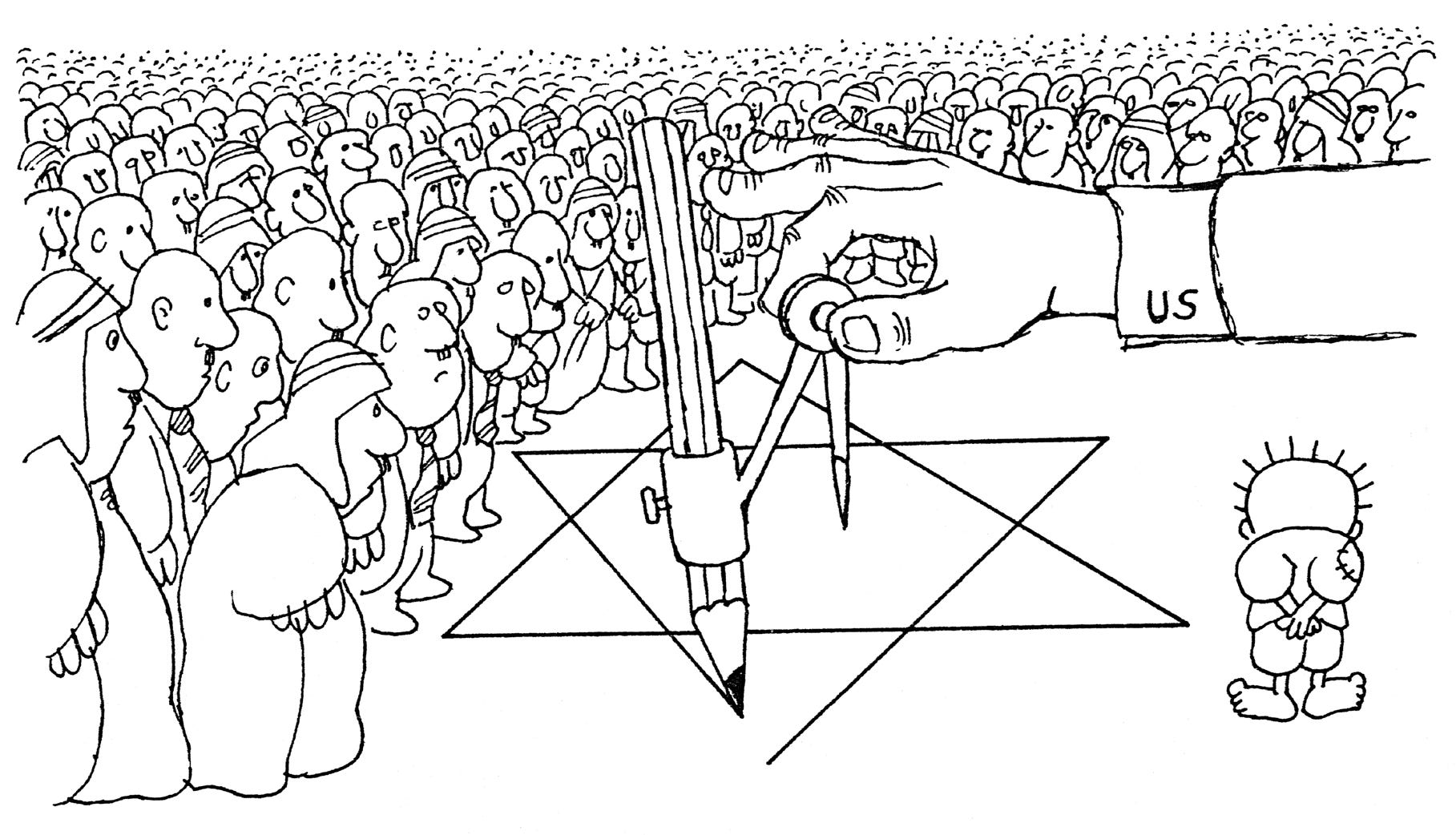
The essential demand is not for better analysis of our Palestinian condition, but for action against their state’s crimes. Beinart’s primary, and most relevant, identity is not that of a “leftist secular Jew” grappling with zionism; it is that of an American citizen, a subject of the empire enabling this genocide. His responsibility is not to dissect the nuances of Palestinian resistance but to relentlessly target the American war machine—the funding, the arms, the diplomatic cover—that makes the occupation permanent and the genocide possible.
We are done catering to the narcissistic obsession with zionism’s “soul.” Let Beinart and his peers remember the power of their passports and the weight of their privilege. Let them train their gaze unflinchingly on the grimy truth: that their government is the primary architect and sponsor of this ongoing Nakba. Only when they finally embrace this duty—and abandon the condescending mantle of interpreting the native for the West—will the public finally see the raw, monstrous reality: a genocide and a settler-colonial project, ruthlessly carving a genocidal outpost of Western imperialism from the land, blood, and bones of Palestine.